


There comes a moment in many families when roles begin to reverse. The parent who once managed everything now needs support, and siblings find themselves making decisions about care, housing, and finances without a shared plan.
That pressure can turn normal conversations into conflict, silence, or a crisis-driven choice nobody feels good about.
Elder mediation is a confidential, voluntary process in which a neutral mediator helps families make decisions about aging-related care, housing, finances, and roles through structured conversations.
Instead of arguments or avoidance, participants clarify concerns, align priorities, and document practical next steps that protect the older adult and reduce family strain.
At Saunders Mediation in Annapolis, we help families slow the tension and refocus on what matters most. The well-being, dignity, and safety of your aging loved one.
Whether you are navigating caregiving responsibilities, living arrangements, financial strain, or difficult medical decisions, we help you move forward with clarity and compassion. If your family is struggling to talk without conflict, we are here to help you talk through it instead.
Who it’s for
- Adult siblings disagreeing about caregiving, money, or decision-making authority
- Families deciding between staying at home, moving in, or choosing assisted living options
- Situations where one person feels overburdened, and resentment is building
- Concerns about transparency, influence, or financial decisions being made in isolation
- Families trying to avoid guardianship conflict, legal escalation, or permanent relationship damage
When Family Roles Shift, and Emotions Run High

Few moments in life are as complex as caring for an aging parent. The emotions are layered, encompassing love, loyalty, guilt, fear, and, at times, resentment.
One sibling may feel alone in handling everything. Another may live far away and feel left out or blamed. Spouses and adult children may disagree on what is best for them.
The elder parent, still wanting autonomy, may feel unheard in decisions about their own life.
These transitions stir up more than logistics. They often reopen old family wounds and shift long-standing dynamics, putting pressure on relationships that were already fragile.
Communication becomes guarded. Meetings become arguments. Silence replaces cooperation. And all the while, time-sensitive decisions hang in the air, unmade, unclear, and urgent.
Why These Conversations Often Get Stuck
Families do not avoid hard conversations because they do not care. They avoid them because they care so deeply, they fear saying the wrong thing.
- Some family members hesitate to speak up, worried about offending others or seeming controlling.
- Old resentments and sibling rivalry can resurface.
- Differing values around money, independence, or quality of life create emotional friction.
- Cultural or generational beliefs shape each person’s view of what “doing the right thing” looks like.
Without a neutral and respectful space to discuss them, these issues rarely resolve on their own.
Elder mediation provides your family with the space and a process that moves everyone forward together.
What Is Elder Mediation and How Can It Help? 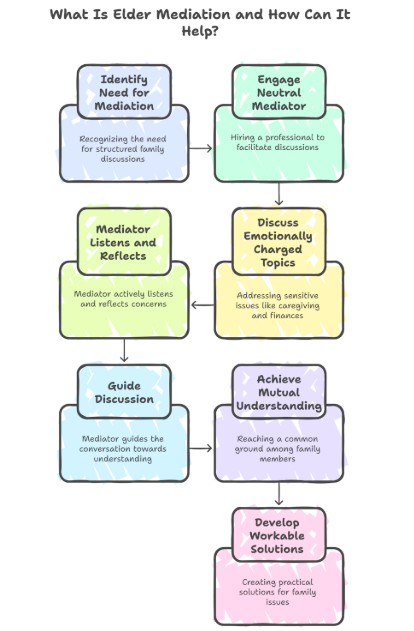
Elder mediation is a structured, private conversation led by a neutral professional. It helps families discuss emotionally charged topics such as caregiving, medical planning, living arrangements, and finances without falling into conflict or silence.
The mediator is not there to take sides or make decisions on behalf of the parties. They are there to listen deeply, reflect concerns, and guide the discussion toward mutual understanding and workable solutions. Every voice matters. Every problem is addressed.
At Saunders Mediation in Annapolis, we tailor this process to your family’s unique dynamic.
Whether there are two people in conflict or ten, the goal remains the same: clear communication, healthy boundaries, and decisions that reflect everyone’s care for the person at the center of it all.
Issues Commonly Addressed in Elder Mediation
Every family is different, but many elder mediation cases revolve around these shared concerns:
- Living arrangements: Should the aging parent stay at home, move in with family, or transition to assisted living?
- Division of care: How is caregiving shared, and who takes on what responsibilities?
- Medical choices: What happens when siblings disagree about treatment, doctors, or end-of-life preferences?
- Financial planning: Are bills being handled fairly? Are family members worried about undue influence or hidden decisions?
- Guardianship or power of attorney: Who makes legal decisions if the elder’s capacity changes?
These conversations can feel impossible. But when they happen in the right environment, with guidance and care, they can become moments of clarity, healing, and progress.
Real-Life Scenarios We Help Families Navigate in Annapolis
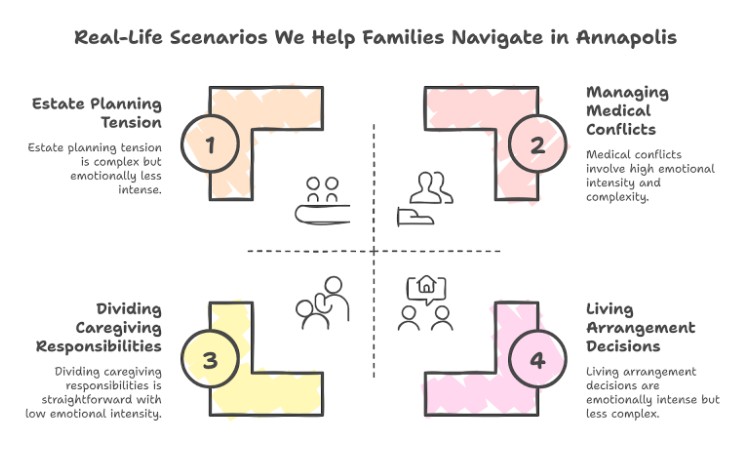
Elder mediation is not just about solving problems. It’s about preserving relationships while navigating some of life’s most challenging decisions.
These are the situations families bring to Saunders Mediation every week—private, painful, and urgent.
Dividing Caregiving Responsibilities Between Siblings
When one sibling handles the daily care while others contribute little or nothing, resentment builds.
Tension rises between those nearby and those far away. Conversations become defensive. Feelings get hurt, and the elder loved one ends up caught in the middle.
Mediation brings these concerns to light without judgment, allowing families to create realistic and respectful caregiving plans that everyone agrees on.
Making Decisions About Living Arrangements
Should your parent stay in their home, move in with you, or transition to assisted living? These questions often spark disagreements about safety, finances, independence, and convenience. Each sibling may see the situation through a different lens.
We create space to discuss all options thoroughly, so your family can make a decision that honors both your parents’ wishes and their well-being.
Managing Medical and End-of-Life Planning Conflicts
Few topics carry more emotional weight than health care. Disagreements over treatments, doctors, or palliative care can fracture families at the very moment unity is most needed.
We help clarify values, interpret prior directives, and ensure that everyone has the opportunity to share concerns without fear of blame or pressure.
Handling Family Tension Around Estate Planning
Even well-written wills do not prevent emotional fallout. Mistrust, fear of financial abuse, and misunderstandings about inheritance can break lifelong bonds.
Mediation provides an opportunity to address unspoken concerns early, clarify intentions, and prevent costly and painful legal battles in the future.
If your family is struggling with decisions regarding caregiving, housing, or medical care, Saunders Mediation can help you discuss them with dignity and respect. Schedule your private session today.
The Saunders Mediation Approach to Elder Conflict
At Saunders Mediation, we understand that aging-related decisions are never just logistical.
They are deeply personal and often emotionally charged. That is why we approach every family with patience, neutrality, and respect.
Our sessions are private, trauma-informed, and adapted to each family’s dynamic. Whether your group includes two siblings or a multi-generational household, we make sure every voice is acknowledged.
The Elder Mediation Process
Aging-related decisions become easier when the right people are included, the issues are clearly defined, and conversations stay structured.
We create a calm process where everyone is heard, priorities are clarified, and outcomes are documented.
- Intake and fit check: goals, urgency, who should participate, and constraints
- Issue map: define the exact decisions to make and the order to address them
- Preparation: gather essentials and clarify boundaries and non-negotiables
- Mediation sessions: guided dialogue, option-building, and tradeoff testing
- Draft terms: convert decisions into clear responsibilities and next steps
- Review and finalize: optional professional review, then confirm implementation
- Follow-up if needed: adjust plans as health, needs, or circumstances change
Outcomes
By the end of mediation, families typically leave with a clear plan. Common outcomes include agreed caregiving roles and schedules, decisions about living arrangements, communication rules for updates and emergencies, financial responsibilities and transparency expectations, and a plan for future decision-making if capacity changes. Even when full agreement is not reached, mediation often reduces tension and prevents
Why Annapolis Families Choose Saunders Mediation for Aging Transitions
When facing aging-related decisions, families in Annapolis choose Saunders Mediation because of our commitment to dignity, empathy, and progress.
We do not take sides. We help you talk, listen, and move forward—together.
Local Reputation for Dignified, Balanced Mediation
Families, elder care professionals, and local attorneys trust Saunders Mediation to create calm in the most emotional family moments. Referrals are our strongest endorsement.
Deep Experience with Multigenerational Family Dynamics
With decades of experience, Don Saunders understands the complexities that arise between siblings, stepfamilies, spouses, and adult children when navigating high-stakes decisions.
Calm, Structured Support for Tough Conversations
Our process prioritizes emotional safety, clarity, and actionable outcomes—so your family can resolve conflict without breaking apart.
Could Elder Mediation Help Your Family Communicate Again?
If you are asking hard questions and getting harder silence in return, it may be time to try something different. Elder mediation creates a space for clarity and collaboration, even when emotions are high.
- Are you caught in ongoing arguments about caregiving or finances?
- Do you feel that tension is affecting your parents’ well-being?
- Are important decisions being made in isolation or secrecy?
- Do you want to preserve relationships while still addressing difficult truths?
If so, Saunders Mediation is here to help you talk through it—safely, calmly, and with purpose.
Is elder mediation confidential?
Yes. Mediation is designed to be private, so family members can speak openly. What is shared outside sessions is typically limited to what the family agrees to document as next steps or a written summary.
Can the older adult participate in elder mediation?
Often, yes. When appropriate and desired, the older adult can participate, and their voice is treated as central. The right participation approach depends on comfort, capacity, and what decisions need to be made.
Do we need lawyers or financial advisors for elder mediation?
Not required. Some families consult professionals for clarity, especially on legal authority or financial planning. The mediator stays neutral and does not give legal advice, so professional review can be added when helpful.
Related Services from Saunders Mediation for Annapolis Residents
If your family conflict overlaps with divorce, property, workplace stress, or inheritance decisions, these related mediation services can help you choose the right path without escalating to court.
- Family Mediation in Annapolis. Resolve co-parenting, separation, and household transitions with structure, compassion, and durable agreements.
- Probate Mediation in Maryland. Prevent prolonged litigation over wills, executor decisions, and inheritance by settling disputes privately and respectfully.
- Civil Mediation in Annapolis. Work through shared real estate, personal loans, reimbursements, and family money disputes with clear written terms, without destroying trust.
- Workplace Mediation in Annapolis. If family stress is spilling into work relationships or HR risk, workplace mediation helps restore communication and function.
- Elder Mediation in Annapolis. When caregiving, housing, finances, and decision roles are the core issues, elder mediation helps families align before crisis or burnout.
When emotions run high and communication breaks down, Saunders Mediation offers families in Annapolis a path to clarity. Reach out today to schedule a confidential consultation.
Elder mediation helps Annapolis families make aging-related decisions in a confidential, structured setting. A neutral mediator guides discussions about caregiving roles, living arrangements, medical choices, and finances. The process reduces conflict, clarifies responsibilities, and documents next steps. Families use mediation to protect dignity, reduce stress, and avoid court escalation.
People Also Ask
Is elder mediation legally binding?
Mediation itself is not binding. Agreements can become enforceable when the family puts terms in writing, and everyone signs. Many families have an attorney review the summary before signing, especially when decisions involve legal authority, finances, or future responsibilities.
Can the older adult participate in elder mediation sessions?
Yes, often. When appropriate and desired, the older adult can participate and their voice is treated as central. Sessions can be structured to reduce pressure, protect emotional safety, and keep decisions focused on dignity, well-being, and realistic next steps.
What if one sibling refuses to participate in mediation?
Mediation is voluntary, but many reluctant family members agree after the process is explained. Intake helps set expectations and reassure privacy. Even if someone declines, mediation can still help clarify options, reduce escalation, and create a plan for next steps and communication.
Can we include attorneys, financial advisors, or elder-care professionals?
Yes. Families can involve attorneys, financial advisors, care managers, or elder-care planners when clarity is needed. The mediator remains neutral and does not provide legal advice, but professional input can help confirm feasibility and reduce misunderstandings about finances, authority, or care planning.
How many elder mediation sessions are usually needed?
Many families resolve the main issues in two to four sessions. The timeline depends on how many decision points are involved, how many people participate, and how prepared everyone is. Complex topics, such as housing transitions or shared finances, may require additional sessions.
Is elder mediation better than going to court over guardianship or inheritance?
In many cases, yes. Mediation is typically faster, more private, and less damaging to relationships than litigation. It can help families align before guardianship filings become necessary. In cases of inheritance conflict, mediation may also help, but some cases still require legal action, depending on the deadlines and facts.
When should our family call an elder mediator?
Call when decisions about care, housing, money, or authority are being delayed by conflict, avoidance, or mistrust. If one person is carrying the burden, communication keeps breaking down, or the situation is approaching crisis, mediation provides a structured path to agreement and clear responsibilities.
Should we try elder mediation before filing for guardianship?
Often, yes. Mediation can help families clarify concerns, set safeguards, and agree on roles before a court process becomes necessary. If there is an immediate safety risk, suspected exploitation, or urgent medical decisions, involve appropriate professionals while considering mediation as part of the solution.