Exceptions include threats of serious harm, claims of mediator misconduct, fraud, duress, or misrepresentation in agreements, as well as a few specified legal requirements.
This confidentiality helps facilitate open dialogue while maintaining legal safeguards.
The confidentiality rules protect what people say during mediation sessions. However, these protections have limitations, and you should be aware of them before sharing any sensitive information.
Knowing when confidentiality actually applies, and when it doesn’t, can help you decide what to reveal during mediation.
Exceptions include child abuse reports, threats of harm, and claims of fraud or duress
Mediators have to keep things private, but the parties themselves can decide whether to share details
What Does “Confidentiality” Mean In Maryland Mediation?
Confidentiality in Maryland mediation means that all information shared during mediation is protected from disclosure.
Maryland mediation confidentiality rules stop people from being forced to spill the details of what happened in those sessions.
Scope Under Rule 17-105(a)
Rule 17-105(a) only covers court-ordered or court-referred mediations in civil cases. The rule establishes strict confidentiality protections in these situations.
If a court orders mediation, everyone involved—mediator, parties, attorneys, and anyone else in the room—must keep mediation communications private.
The rule protects:
Verbal communications during sessions
Written materials prepared for or exchanged in mediation
Settlement discussions between parties
Mediator observations and notes
Maryland’s confidentiality protections encourage individuals to speak openly and honestly. You can speak freely, knowing your words won’t be used against you in court.
The rule is broad, but it only applies when Title 17 of the Maryland Rules governs the mediation.
Confidentiality Applies To All Communications
Maryland law protects every communication in mediation. Essentially, what’s said or shared in mediation remains confidential.
Mediators and participants have to maintain confidentiality for all mediation communications. They can’t disclose this stuff in court or anywhere else in a legal proceeding.
Protected communications include:
Statements made by parties in sessions
Proposals and counteroffers
Admissions of fault or liability
Settlement terms discussed but not finalized
Documents created just for mediation
This protection covers more than just the session itself—it also includes pre-mediation communications and post-session discussions tied to the mediation.
Courts emphasize that confidentiality is crucial to the success of mediation. If people didn’t have these protections, they’d probably hold back during talks.
When Does Rule 17-105 Apply? (Court-Ordered Or Referred Cases)
Rule 17-105’s protections only kick in when a court orders or refers a civil case to mediation under Title 17. Private mediations play by different rules.
Application In Court-Ordered Or Referred Civil Mediations
Maryland Rule 17-105 applies when a judge formally orders or refers a civil action to mediation. That’s when the confidentiality rules start working.
Court-ordered mediation happens when:
A judge tells the parties to go to mediation
The court refers a case to ADR through official programs
Many Maryland counties keep court-approved mediator lists. If the court assigns your case to one of these mediators, Rule 17-105 confidentiality kicks in automatically.
Private, Voluntary, Or Alternative Mediation Confidentiality
If you enter mediation voluntarily, the protections of Rule 17-105 do not apply. Private mediations employ different legal frameworks to ensure confidentiality.
When people choose private mediation, they rely on confidentiality agreements in their contracts—not Rule 17-105. These can offer more or less protection, depending on what’s in writing.
Private mediators and parties must clearly outline their own confidentiality protections. The written agreement should say what stays private and when, if ever, it can be shared.
These exceptions aim to prevent harm, address professional misconduct, and safeguard individuals from unfair practices.
Preventing Serious Bodily Harm Or Death
Mediators can break confidentiality if someone is in immediate danger. This exception protects people from threats of serious physical harm or death.
This exception applies when:
Someone threatens violence
There are plans for serious bodily injury
There’s a real risk of someone dying
The mediator has to believe the threat is real and immediate. They can’t break confidentiality over minor arguments or property squabbles.
Maryland Courts recognize these exceptions for “threats of harm to a person.” So, mediators have a clear duty to act if safety’s on the line.
This exception only covers threats of serious physical harm—not financial threats or damage to stuff.
Addressing Mediator Misconduct Or Negligence
If you need to challenge the mediator’s conduct, confidentiality won’t block you. This exception ensures that mediators adhere to professional standards.
Covered misconduct includes:
Bias toward a party
Not being neutral
Mishandling the mediation
Breaking professional standards
The Maryland Rules let you file complaints about a mediator. You can use what happened in sessions as evidence.
Courts require these details to investigate mediator performance. The exception aims to strike a balance between confidentiality and holding mediators accountable.
You have to show the mediator’s actions affected the outcome. Minor mistakes or quirks usually don’t qualify.
Challenging Agreements Due To Fraud, Duress, Or Misrepresentation
If you claim your agreement came from lies or illegal pressure, courts can look at what happened during mediation. This exception protects people from unfair settlements.
Protected situations:
Fraud: False statements about facts or law
Duress: Threats or coercion to force agreement
Misrepresentation: Hiding key information
You have to prove these things happened during mediation. Written agreements from mediation aren’t always confidential if there’s a dispute about how they came to be.
The court will review the mediation sessions to determine if the agreement remains in effect. You need strong evidence of wrongdoing—just regretting the deal isn’t enough.
Clarification Of Exceptions
Maryland’s rules aim to strike a balance between privacy and necessary disclosures. Rule 17-105 exceptions only apply to court-ordered or court-referred mediations.
Important limitations:
Exceptions must fit the exact rule
Mediators can’t invent new exceptions
All disclosures have to serve a real legal purpose
The list of what can be disclosed is short and specific. Courts won’t let people go on fishing expeditions through mediation talks.
You must prove that your situation fits the exception. General complaints about unfairness won’t get around confidentiality.
Additional Exceptions & Special Situations
Maryland law sometimes requires disclosure if there’s serious harm or abuse. Mediators must report certain dangerous situations, even when confidentiality would normally apply.
Disclosure Of Child, Elder, Or Vulnerable Adult Abuse
Mandatory reporting laws override mediation confidentiality in Maryland when abuse comes to light. If mediators become aware of harm to protected individuals during sessions, they’re required to report it.
Child abuse needs to be reported right away to local authorities. This covers physical abuse, sexual abuse, neglect, or emotional harm to anyone under 18.
Elder abuse reporting kicks in for adults 65 and older. Physical harm, financial exploitation, or neglect of elderly folks means the mediator has to notify authorities.
Vulnerable adult protection extends to people with disabilities or mental health conditions. Adults who can’t protect themselves because of physical or mental limitations get the same reporting protections as kids and seniors.
Acts Of Violence, Serious Threats, Or Unusual Cases
Threats of immediate violence let mediators break confidentiality. If someone threatens harm during mediation, the mediator can warn potential victims or call the police.
If someone discusses planning a crime during mediation, the mediator may report it. Future criminal activity isn’t protected when public safety is at stake.
Court orders can override confidentiality in rare situations. Judges might require disclosure if the need for evidence outweighs confidentiality rules.
Self-defense is another exception. If someone admits to violence in self-defense, the mediator might have to share that if legal action follows.
The Maryland Standards of Conduct for Mediators guide mediators in making informed decisions. Mediators must weigh the importance of confidentiality against the need for public safety and their legal obligations.
When conflicts feel overwhelming, Saunders Mediation provides civil mediation services that simplify the process and protect your interests. Don’t wait to take control of your resolution—schedule with us now.
What Remains Confidential—And What Doesn’t?
Maryland’s mediation confidentiality rules draw a line between what remains private and what can be made public. The final agreement and general case details get treated differently.
Confidentiality Of Signed Agreements
Mediated settlement agreements lose their confidential protection once parties sign them. The Maryland confidentiality rules are clear about this.
Once everyone signs the agreement, it’s enforceable. Courts need to review these agreements to resolve disputes about their interpretation.
What becomes public:
The final written agreement
Terms and conditions both parties agreed to
Any changes made to the original deal
The signed agreement might get filed with the court. Other parties in similar cases could find these documents through legal channels.
Basic case information remains available for discovery even when mediation happens. Maryland’s mediation confidentiality only shields what gets said during the mediation itself.
Documents that existed before mediation aren’t suddenly confidential. Evidence gathered outside mediation stays fair game in court.
What other parties can discover:
Financial records from before mediation
Witness statements made outside of mediation
Physical evidence tied to the case
Expert reports prepared independently
Discovery limitations:
No access to mediation session recordings
Can’t force disclosure of settlement talks
Mediator notes stay confidential
Private caucus communications are protected
Courts won’t allow discovery requests that dig into what happened during mediation sessions. However, they can’t block access to information that was already available before mediation began.
The key difference is all about timing and context. Information shared solely for mediation receives protection, but pre-existing case materials don’t.
Why Confidentiality Matters
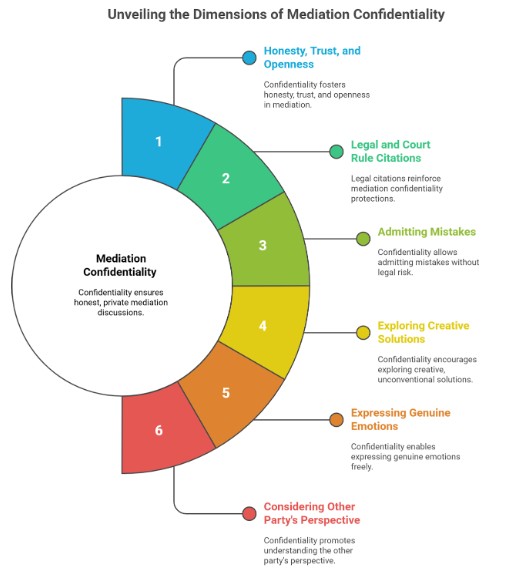
Confidentiality forms the backbone of successful mediation. It encourages people to speak honestly, knowing that Maryland Rule 17-105 sets boundaries that allow individuals to discuss matters without worrying about potential future legal repercussions.
Honesty, Trust, And Openness
Mediation confidentiality takes away the fear that honest statements will get used against you. If people know their words stay private, they’re more likely to open up about what really matters to them.
Confidentiality in mediation alleviates concerns about honest financial disclosures being disclosed elsewhere. Parents can discuss parenting ideas without those thoughts coming back to haunt them in court.
Trust grows when both sides know the mediator can’t spill private conversations to the other side. Theneutral environment makes it easier to solve problems instead of digging in.
Benefits Of Legal And Court Rule Citations
Maryland’s legal framework gives real authority to mediation confidentiality protections. Rule 17-105 outlines the rules regarding discovery and what constitutes confidential information.
Court decisions support these protections, emphasizing the importance of confidentiality for mediation to be effective. Courts keep saying mediation’s success depends on the promise that private talks really stay private.
Legal authority sources include:
Maryland Rule 17-105
State statutes
Court decisions
Professional mediation standards
These citations show that confidentiality protections aren’t just a handshake deal—they’re backed by law.
What To Do As A Participant In Maryland Mediation
If you’re going into mediation, it’s essential to understand your confidentiality rights and how to safeguard sensitive information. It’s wise to clarify the rules with your mediator and consider additional legal protections if required.
Mediator’s Responsibility To Explain Confidentiality
The mediator must explain the confidentiality rules before the mediation begins. Maryland mediators follow rules that require them to inform participants about what remains private.
If you’re confused about the rules, ask questions. The mediator should explain which conversations are protected and which aren’t.
Key questions to ask:
What info can be shared outside mediation?
Are there any exceptions to confidentiality?
How does confidentiality work if the case ends up in court?
Parties in mediation can establish their own confidentiality agreement, exceeding the requirements of Maryland law. This provides additional protection for sensitive information.
A confidentiality agreement can cover things like:
Business financial info
Personal family matters
Trade secrets or proprietary info
The mediation confidentiality agreement should be written and signed by everyone. That’s a stronger legal shield than just relying on state rules.
It’s a good idea to discuss what you want to keep private before mediation begins. You can request that the mediator include specific confidentiality terms in your agreement.
Some individuals prefer agreements that prohibit discussion of the mediation process itself. Others focus on protecting certain documents or information shared during sessions.
Consulting An Attorney For Sensitive Matters
If you’re facing complex legal issues, you should talk to an attorney before heading into mediation. This matters even more when you think confidentiality exceptions could come into play.
An attorney can walk you through how confidentiality works in your specific situation. They’ll also help draft stronger protection agreements if needed.
When to consult an attorney:
You’re discussing criminal matters
There are concerns about child safety
Professional licensing is at risk
The financial stakes are significant
Let your attorney review any confidentiality agreement before you sign. They’ll ensure you understand which information Maryland law may not protect.
Some people bring their attorney right into the mediation session. That way, you get instant legal advice without losing out on what mediation offers.
Yes. Under Maryland Rule 17-105, mediation communications are generally confidential and cannot be disclosed or used as evidence in court. This protection allows parties to speak openly. Exceptions apply in specific cases, such as threats of harm, mediator misconduct, or challenges to fraud.
What does Rule 17-105 say about mediation confidentiality?
Rule 17-105 states that communications made in a court-ordered or referred mediation are not subject to discovery or testimony in any proceeding. Mediators and participants cannot be compelled to reveal what was said, with narrow exceptions allowed under the rule.
Are there exceptions to mediation confidentiality in Maryland?
Yes. Exceptions include disclosures to prevent serious harm or death, report child or vulnerable adult abuse, address mediator misconduct, or challenge agreements made through fraud, duress, or misrepresentation. These exceptions strike a balance between confidentiality, public safety, and legal accountability.
Does confidentiality apply to private mediations in Maryland?
Confidentiality in private mediation depends on either the Maryland MediationConfidentiality Act (MMCA) or a written agreement between the parties. While Rule 17-105 governs court-ordered mediations, private mediators usually include confidentiality clauses to mirror similar protections.
Are mediation settlement agreements confidential in Maryland?
No. While discussions during mediation are confidential, the final written agreement is not unless the parties agree in writing to keep it private. Courts may review and enforce mediated agreements, which can become part of the public record in certain cases.
Can a mediator testify about what happened in mediation?
Generally no. Maryland Rule 17-105 prohibits mediators from testifying about communications during mediation. The only exceptions are when testimony is required to prove mediator misconduct or when permitted by law under one of the limited exceptions.